

Team T-force Vulcan Z 8gb 3000mhz
Tom's Hardware Verdict
Team Group's RGB-complimentary Vulcan Z DDR4-3200 C16 gets the performance-to-toll ratio needed to win us over for value, but its full functioning is only bachelor when installed on an Asus motherboard.
Pros
- +
Good price
- +
Good performance on Asus motherboards
- +
Spectacular overclocking capability
- +
Good timing optimization capability at lower data rates
Cons
- -
Needs an Asus motherboard to perform well.
July 23 2019 Update: Armed with some additional information from MSI about how Asus boards reach better results with this kit, we ran some additional tests beneath.
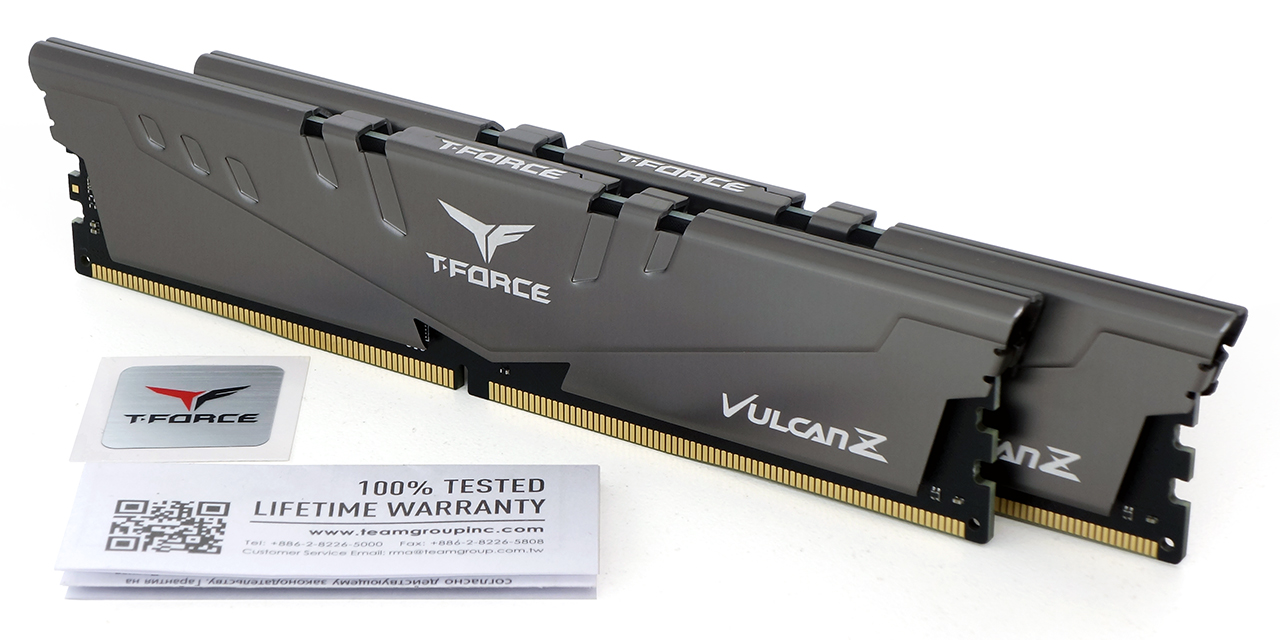
Regardless of the superlatives Squad Group (aka Teamgroup) uses to describe itself, its presentation of operation and features at reasonable prices has sent a strong value message to the enthusiast market. Today's 16GB Vulcan Z DDR4-3200 CAS 16 dual-channel kit continues that trend with an $fourscore web price, which the firm achieves by eliminating the RGB LEDs found on some of its higher-priced models.
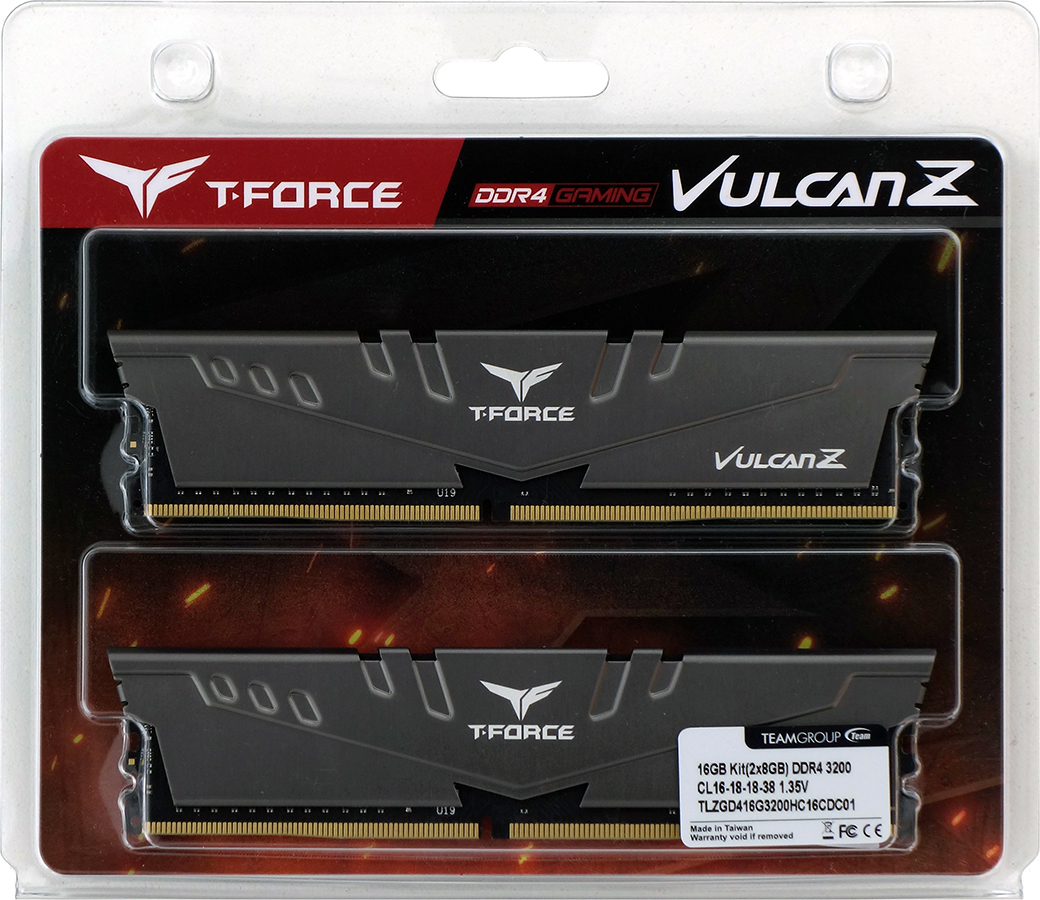
The master timing set up for this kit (function-number TLZGD416G3200HC16CDC01) is isn't great at 16-18-xviii. Latency is measured in clock cycles, with lower numbers indicating quicker response, and we remember of latency-optimized retentivity as having timings less than or equal to one cycle for every 200 MHz data rate. While the second and third main timing (tRCD and tRP) are a scrap worse than the 16-bike maximum we'd similar to see at DDR4-3200, both are less impactful on operation compared to the get-go number. Moreover, 16-eighteen-18 timings are used on most DDR4-3200 kits that compete for the same market place segment.
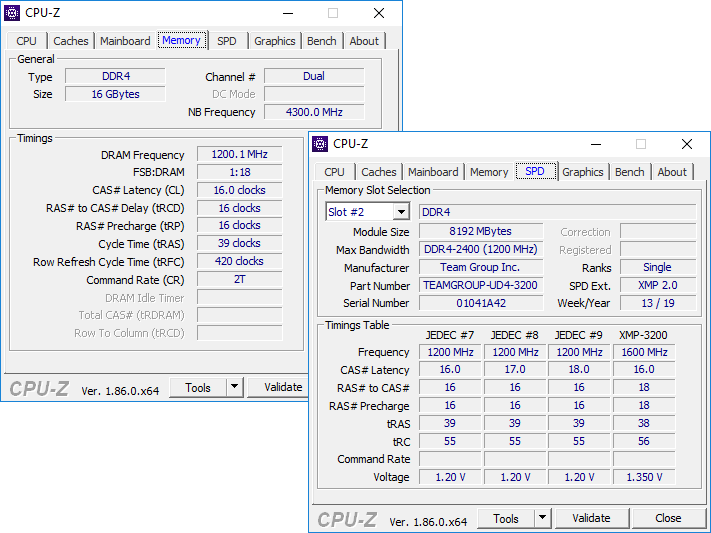
You'll need a motherboard and processor that supports both XMP and the DDR4-3200 information rate to go this kit to perform every bit intended, which primarily limits the kit's target platform to Intel Z-series boards using K-serial Cadre i5 and Core i7 processors. There are certainly several AMD Ryzen processors and compatible motherboards that can also run DDR4-3200 at 16-18-xviii timings, only the lack of universal compatibility requires that each AMD CPU/motherboard combination be independently tested and verified with every single XMP kit.
Due to the ever-changing memory landscape, the compatibility lists produced by motherboard vendors is never comprehensive. Many of our forum members are competent to make stability-aiding adjustments suggestions. Merely inexperienced AMD organization builders who aren't ready to settle for the kit's DDR4-2400 C16 basic (non-XMP) mode could be in for a long conversation rather than the like shooting fish in a barrel plug-and-play performance they might expect.
Comparison Hardware
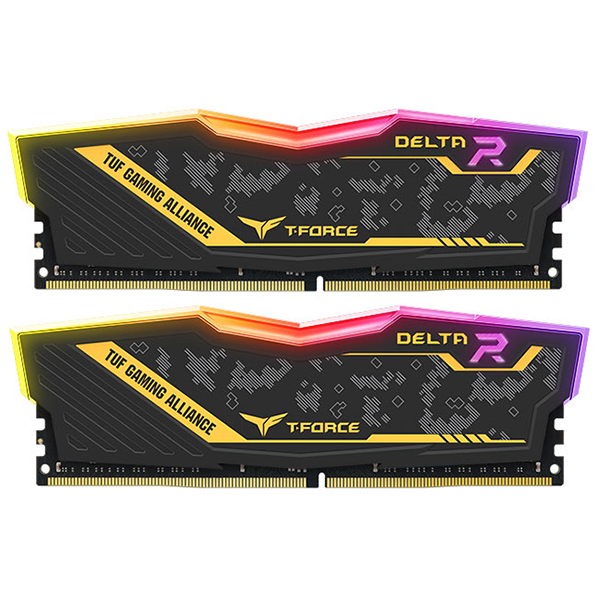
Our recent focus on 32GB kits has left us with only a few contempo 16GB kits to compare, and all of those have RGB. We were fortunate to find that Silicon Power's recently-tested XPower Turbine RGB has the same DDR4-3200 C16 configuration and that the extra cost for its RGB lighting was a mere $15. Digging back a little farther we constitute a second TeamGroup kit, but had to go all the way back to the finish of last summer to observe our quaternary contender.
(opens in new tab)
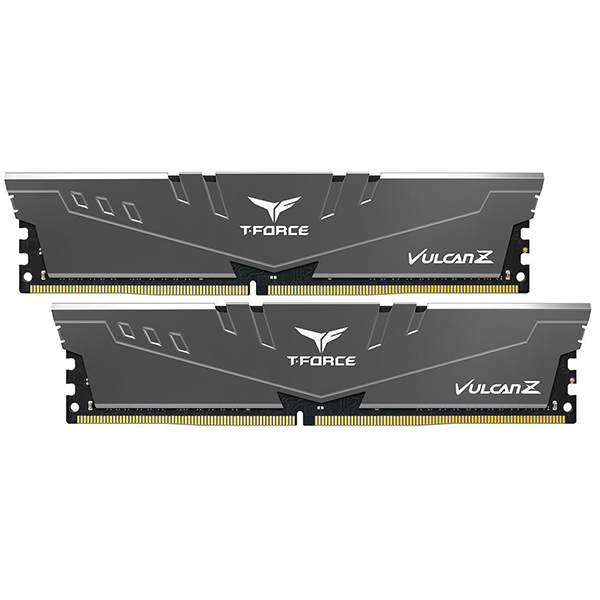
T-Force Vulcan Z DDR4-3200 (2x 8GB)
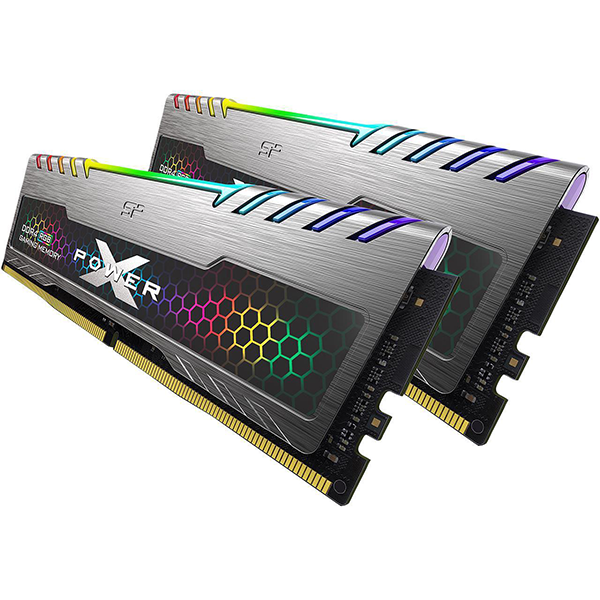
S.P. XPower Turbine RGB DDR4-3200 (2x 8GB)
(opens in new tab)
Squad Group Delta Tuf Gaming RGB DDR4-3200 (2x 8GB)
Asus' Maximus XI Hero hosts Intel'southward Core i9-9900K processor at a fixed iv.80GHz frequency, using Fractal Blueprint's Celsius S24 to keep information technology absurd. Toshiba's OCZ RD400 NVMe SSD and MSI's GTX 1080 Armor OC reduce bottlenecks in other areas.
Overclocking & Latency Reduction
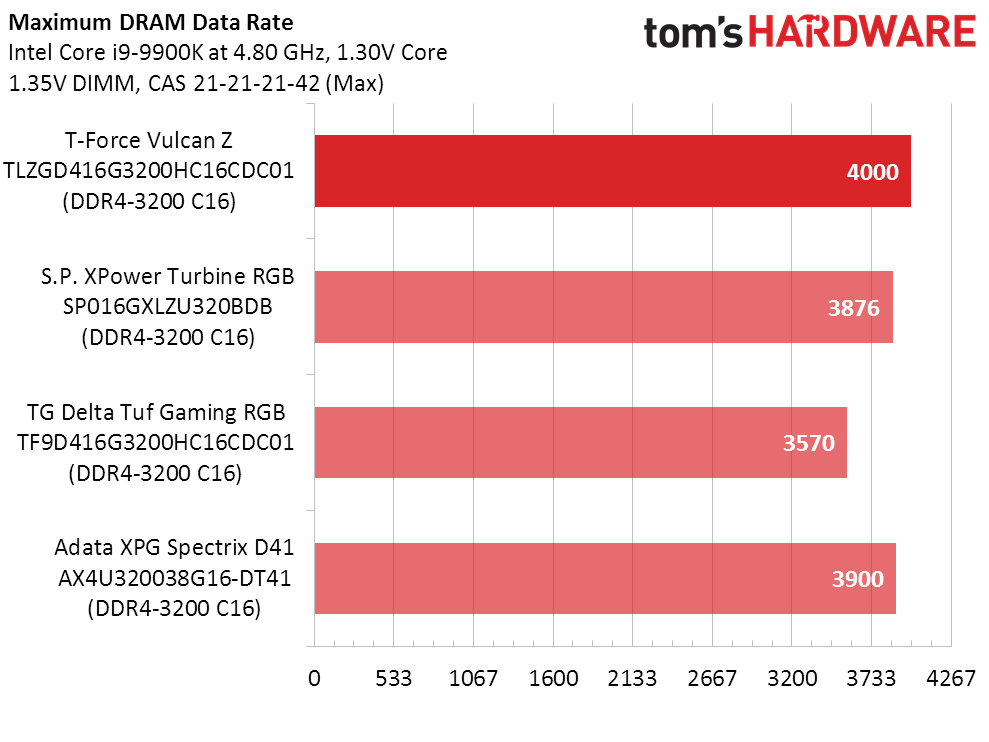
Vulcan Z is the first DDR4-3200 kit we've tested to reach DDR4-4000 on this exam platform, though that number was reached more than easily on our previous Z370 arrangement. It got there using xix-21-21-42 timings, and loosening the get-go number to 21 cycles did non allow it to clock any higher.
| Lowest Stable Timings at i.35V (Max) on ROG Maximus XI Hero (BIOS 0805) | ||||
| DDR4-4000 | DDR4-3466 | DDR4-2933 | DDR4-2400 | |
| T-Force Vulcan Z T LZGD416G3200HC16CDC01 ( 2x 16GB dual-rank ) | ✗ | 16-18-18-36 (2T) | thirteen-15-15-xxx (1T) | xi-12-12-28 (1T) |
| Due south.P. XPower Turbine RGB SP016GXLZU320BDB ( 2x 16GB dual-rank ) | ✗ | 17-18-18-36 (2T) | 14-sixteen-16-32 (1T) | eleven-13-xiii-28 (1T) |
| TG Delta Tuf Gaming RGB TF9D416G3200HC16CDC01 (2x 16GB single-rank) | ✗ | 16-xviii-eighteen-36 (2T) | fourteen-15-15-30 (1T) | 11-12-12-28 (1T) |
| A data XPG Spectrix D41 AX4U320038G16-DT41 (2x 16GB single-rank) | ✗ | xvi-18-18-36 (2T) | 14-16-sixteen-32 (1T) | 11-13-13-28 (1T) |
Though it reached DDR4-3466 at the same 16-xviii-xviii-36 timings equally two of its competitors, Vulcan Z won the latency race at DDR4-2933 past supporting CAS 13.
Benchmark Results
All four kits produce similar bandwidth in respect to our four tested data rates, though the Vulcan Z's lower latency capability at DDR4-2933 helps it stand up out in just 1 of the four Sandra Latency measurements.
F1 2015 is a great game for testing retention performance, but the Vulcan Z falls to third identify when comparing all four kits at XMP settings. And so once again, the difference is too small-scale to see within the game. Furthermore, it produced the highest frames-per-2nd when tested at DDR4-3466.
None of the kits stood out in our 7-Nada examination, where less compression time indicates more than functioning. That should help the Vulcan Z's low price stand out in our price-to-performance chart.
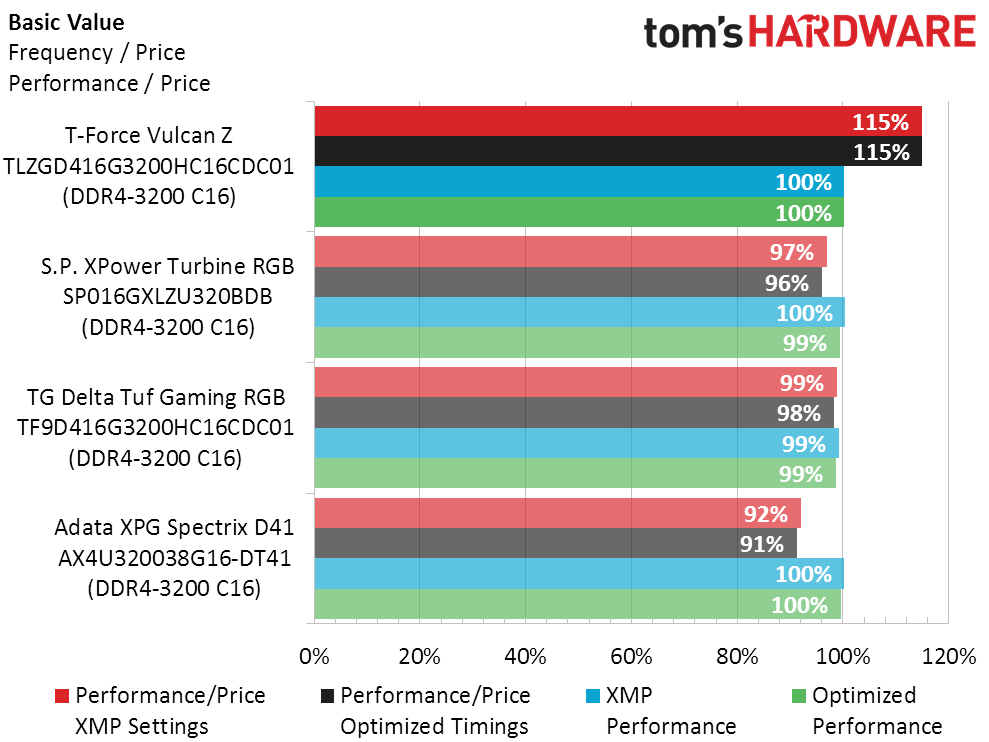
The average price for these four kits was $92, making the Vulcan kit $12 cheaper and giving it a 15% value advantage over the competing, los-price RGB DDR4-3200 with similar timings.
But Is information technology Right For My Motherboard?
Manner back in the Z370 days, we noticed a problem with every Team Grouping DDR4 kit we tested underperforming similarly-spec'd competitors. But it wasn't until we switched to Z390 that we narrowed downward the issue: Team Grouping DDR4 only performs well on Asus boards, and our previous exam system used MSI. Boosted testing proved that the performance deficit was non limited to MSI, but that additional testing was performed using a Core i7-8900K. Today nosotros're updating our tests with a Core i7-9900K and, just for curiosity'southward sake, adding the recently-tested Silicon Power kit.
Goose egg appears awry in Sandra, but a quick await at F1 2015 reveals the issue: The Adata kit performs well on all boards, just the T-Force kit performs will just on Asus motherboards. The same is truthful in 7-Null, and Silicon Power'southward kit appears to accept the same trouble (to a lesser extent).
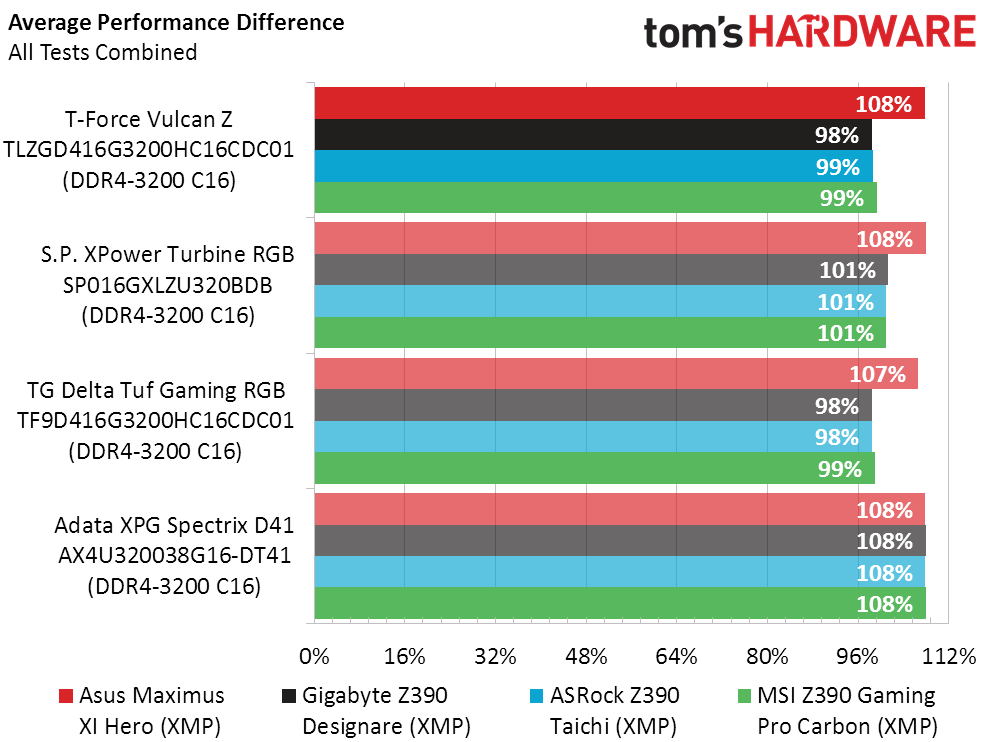
Don't get u.s.a. incorrect, this isn't a sneaky promo for Adata: It'due south just beingness used as a proxy for well-nigh major brands. Considering, of those brands, Adata sent the most-recent 16GB DDR4-3200 C16 comparison kit. Kingston's like lack of motherboard preference has shown beyond our unabridged Z390 Motherboard Serial, and the aforementioned was true for Yard.Skill when we were reviewing Z370 motherboards. If we focus merely on DDR4-3200 C16, nosotros found that G.Skill'southward version had no deficit on an MSI motherboard, and that Patriot's version had no performance arrears on a Gigabyte board.
Of all the high-volume enthusiast brands (Silicon Ability isn't there yet), Team Group stands out as being the i that relies upon Asus to achieve competitive functioning levels, and that'due south why nosotros can only recommend this kit to Asus motherboard owners.
July 23 2019 Update:
Some employees at MSI dug effectually in the Vulcan Z's XMP table, along with its ain firmware and that of the Asus motherboard, to make up one's mind the cause of Team Group's poor operation on non-Asus boards. They constitute that the Asus board was optimizing tFAW (Four Actuate Window, a setting which controls when iv activities are are allowed to run on the aforementioned rank) to be lowerthan specified by the modules, and turned this information over to united states as an FYI. Not able to get out well-plenty lone, we showtime confirmed the firmware setting difference, and so retested this kit using Asus' tFAW on both the MSI and Gigabyte motherboards.
Nosotros shoved the comparison modules between the 2 variations of the T-Strength Vulcan-Z tests. Focusing on the blue bars, we see that the MSI motherboard picked up iii percent in Sandra when using the Asus board'south tFAW. Meanwhile, comparing the black bars shows negligible departure on the Gigabyte board.
The existent fun starts in F1 2015, where the MSI board'south Vulcan-Z results jump from 115.5 to 137.9 FPS. That type of functioning leap repeats in 7-Cypher, where the time to shrink a file dropped by nearly i.5 minutes. Gigabyte again sees far smaller gains from the lower tFAW.
MSI states that it will not be deviating from the retentiveness'south programmed tFAW because doing so tin crusade black screens at boot. The fact that other brands of retentivity perform well beyond all boards once again points back to the retention brand, rather than the motherboard maker, as the bearer of this burden. Given that this doesn't effectively change functioning of this kit beyond all board makers, we're sticking with our previous score.
Photo Credits: Tom's Hardware
MORE: Best Memory
More: DDR DRAM FAQs And Troubleshooting Guide
More: All Memory Content
Source: https://www.tomshardware.com/reviews/t-force-vulcan-z-ddr4-3200-c16-memory-kit,6163.html
0 Response to "Team T-force Vulcan Z 8gb 3000mhz"
Post a Comment